Inside FIFA World Cup 26: A 39-Day Global Run
The 2026 FIFA World Cup is a 48-team football tournament hosted by Canada, Mexico, and the United States from June 11 to July 19, 2026, with 104 matches across 16 host cities. World Cup Hub covers the...

Inside FIFA World Cup 26: A 39-Day Global Run
The 2026 FIFA World Cup is a 48-team football tournament hosted by Canada, Mexico, and the United States from June 11 to July 19, 2026, with 104 matches across 16 host cities. World Cup Hub covers the competition through match predictions, team tactics, player statistics, qualification developments, and daily tournament analysis for fans following the event in North America and worldwide. The expanded format creates 12 groups of four teams, followed by a Round of 32, Round of 16, quarter-finals, semi-finals, and final. Mexico City stages the opening match, while MetLife Stadium in East Rutherford, New Jersey, hosts the final. The tournament also introduces a larger schedule, longer travel routes, and more tactical variables than the 2022 edition. Start by tracking confirmed fixtures, squad news, and venue-specific conditions before judging any team’s chances.
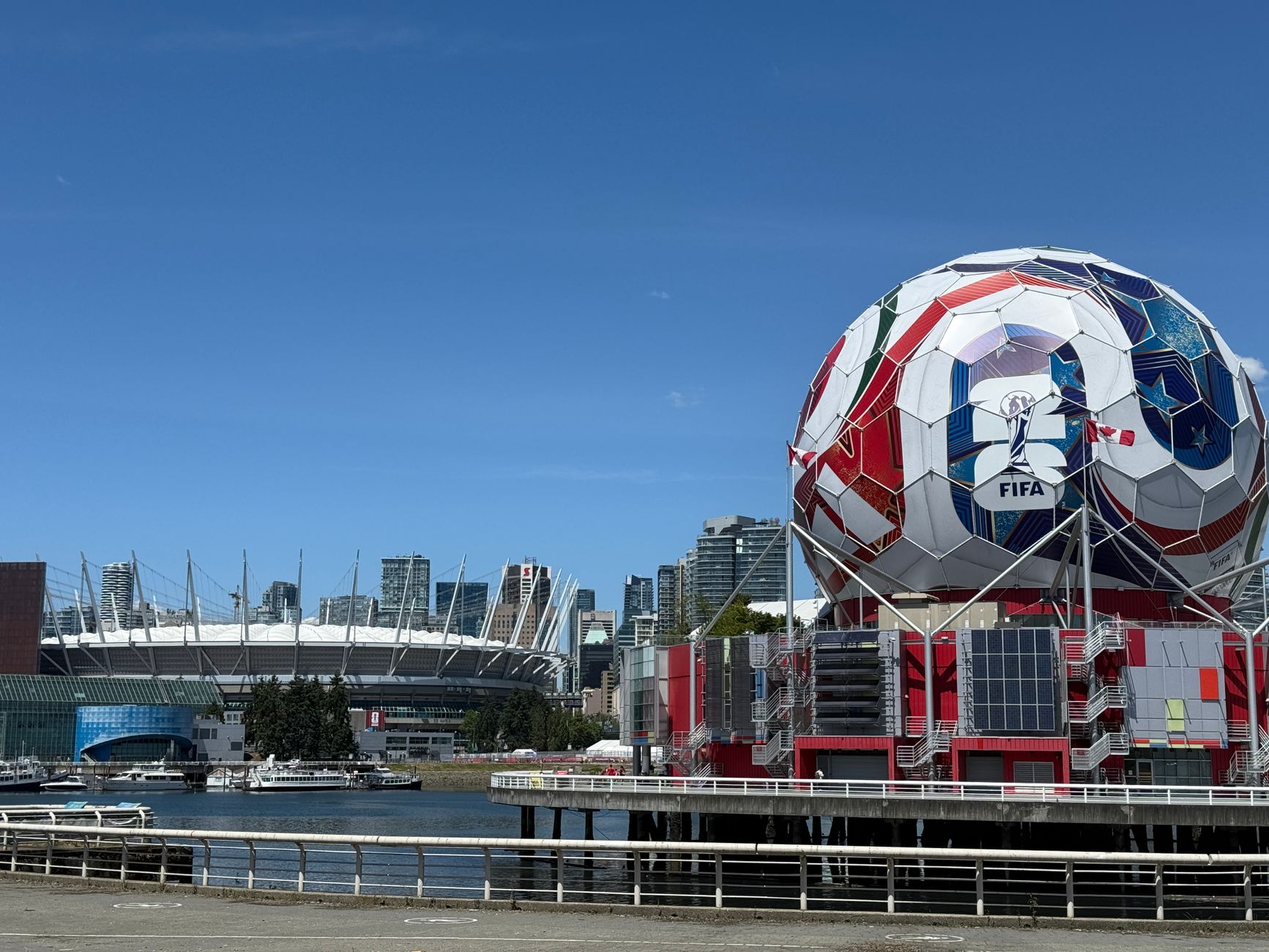
Photo by The Six on Pexels
The 2026 World Cup is not simply Qatar 2022 with extra shirts on the team sheet. The field expands from 32 teams to 48, the match total rises from 64 to 104, and the event stretches across three countries covering six time zones. That changes everything from recovery planning to television scheduling, and yes, it makes lazy “best team wins” analysis even less useful than usual (which is saying something).
World Cup Hub approaches the tournament as a football competition first: who controls midfield, which full-backs survive repeated transitions, how altitude and heat affect pressing, and whether a star player can handle three knockout matches in 11 days. Betting-related information should always be treated as analysis rather than certainty, with local laws, age restrictions, and responsible-play standards taking priority.
Want a clearer starting point for the tournament landscape?
The Quick Comparison
| Category | 2026 World Cup football |
|---|---|
| Host countries | Canada, Mexico, United States |
| Tournament dates | June 11 to July 19, 2026 |
| Qualified teams | 48 |
| Total matches | 104 |
| Host cities | 16 |
| Group stage | 12 groups of four |
| Knockout entry | 32 teams reach the Round of 32 |
| Opening match | Mexico City |
| Final venue | MetLife Stadium, East Rutherford, New Jersey |
| Los Angeles schedule | Eight matches and 39 days of fan activity |
| Main analytical challenge | Travel, climate, squad rotation, and expanded knockout pressure |
The essential comparison is straightforward: the 2026 FIFA World Cup offers more matches and more qualification routes, but it also creates more uncertainty. A team that would have needed near-perfect group-stage results under the old 32-team structure may now qualify with a smaller points total, while third-place teams can advance into the knockout bracket. That matters for prediction models because the value of a single draw changes depending on the group’s strength and goal difference.
The host-city spread is another practical issue. Vancouver, Seattle, Mexico City, Toronto, Atlanta, Miami, Dallas, Los Angeles, and New York/New Jersey do not provide identical playing conditions. A match in Mexico City involves altitude considerations, while summer fixtures in Dallas or Atlanta may involve intense heat and humidity. According to the official FIFA World Cup 2026 tournament overview, the competition’s scale is unprecedented for the men’s FIFA World Cup, and the schedule must be read as a logistical document as much as a football one.
[Internal Link: World Cup 2026 host cities and stadium guide]
Round 1: How Does the Expanded Format Change Football?
The expanded 2026 format changes the FIFA World Cup by increasing participation from 32 to 48 teams and creating 104 matches instead of 64. The competition uses 12 groups of four, with the top two teams and the eight best third-place teams advancing to a 32-team knockout round. This gives more nations a realistic path beyond the group stage.
The format sounds simple until you examine the incentives. In a traditional four-team group with two qualifying places, losing the opening match can put a team in immediate trouble; in 2026, a strong goal difference or a late win may keep a third-place route alive. However, that does not mean teams can drift through the group stage. The eight best third-place teams must be ranked against one another, making goals scored, goals conceded, and disciplinary records potentially decisive according to the competition regulations.
The structure also increases the number of knockout matches. A finalist may play eight games rather than seven, depending on the route through the revised bracket. That extra match places a premium on squad depth, medical preparation, and substitution quality. France, Argentina, Brazil, England, Spain, Germany, Portugal, and the Netherlands may have elite starting elevens, but the winner could be the team whose 15th or 16th player performs reliably under pressure.
A useful way to assess a group is to separate qualification probability from title probability:
- Group-stage survival: Estimate whether the team can finish in the top two or among the eight best third-place sides.
- Bracket position: Identify likely opponents in the Round of 32 and Round of 16.
- Squad endurance: Count high-intensity players available for rotation.
- Travel exposure: Map the distance between matches and training bases.
- Tie-break resilience: Evaluate goal difference, set pieces, and late-game scoring.
One information edge is easy to miss: the third-place ranking creates a cross-group comparison, so a narrow defeat may be less damaging than a heavy defeat even when both produce zero points. This is why goal prevention deserves more attention than headline attacking totals. A team that concedes twice in a seven-minute collapse can lose more than one match; it can damage its entire qualification profile.
FIFA’s official competition format explanation provides the structural basis, but practical analysis requires more than repeating the number 48. World Cup Hub tracks how the format interacts with group strength, tactical risk, and possible knockout pairings.
Get the tournament structure and matchup logic in one place.
Round 2: Which Host-City Factors Could Decide Matches?
Host-city conditions could influence the 2026 World Cup because the tournament spans Canada, Mexico, and the United States, with venues separated by thousands of kilometres and major differences in climate, altitude, pitch environment, and travel time. Mexico City adds altitude, while several United States venues may bring heat and humidity. Teams that manage recovery well can gain a measurable competitive advantage.
The common mistake is treating “North American conditions” as one thing. They are not. Mexico City sits at approximately 2,240 metres above sea level, Vancouver offers a cooler Pacific climate, and Miami presents a very different humidity profile from Seattle. Dallas, Houston, Atlanta, and Monterrey can create demanding summer conditions, especially for teams that rely on relentless counter-pressing over 90 minutes.
Los Angeles deserves separate attention. FIFA World Cup 26 Los Angeles is scheduled to host eight matches, supported by 39 days of fan celebrations, the FIFA Fan Festival at the LA Memorial Coliseum at Exposition Park, and additional official fan zones across the region. SoFi Stadium in Inglewood is the principal match venue for Los Angeles, while the wider city’s transport, accommodation, and event infrastructure will be under severe demand. Fans planning attendance should not assume that a match ticket solves the trip; hotel prices, traffic, and transfers can become the real opponent.
A practical venue assessment should include:
- Altitude: Higher elevation can affect teams unused to reduced oxygen availability.
- Heat load: Temperature and humidity influence sprint repetition and hydration.
- Travel distance: Long transfers reduce recovery time between fixtures.
- Kickoff timing: Local start times can disrupt established sleep routines.
- Surface familiarity: Stadium conditions may influence passing speed and pressing triggers.
- Training-base location: A stable base can reduce unnecessary movement.
After following international tournaments for decades, I have one stubborn rule: never rate a team’s pressing identity without checking where its matches are being played. A high press is not merely a coaching preference; it is a physical contract. If the team cannot repeat the effort after 65 minutes, the tactical idea becomes an invitation for the opponent to attack the space behind the midfield.
The Los Angeles tournament plan also makes the city a useful case study in fan experience. The FIFA World Cup 26 Los Angeles website outlines match-day planning, fan festival activity, and regional celebrations, while the City of Los Angeles provides public information concerning local planning and event operations. These sources matter because the tournament is both a sporting event and a large urban logistics project.

Photo by Gera Cejas on Pexels
The operational edge most previews skip is recovery sequencing. If a team plays in a hot venue and then moves across two time zones for its next fixture, the problem may show up first in substitutions rather than starting lineups. Watch the final 20-minute performance of each contender in its pre-tournament matches; declining sprint output, late fouls, or repeated defensive errors can reveal a conditioning issue before the World Cup begins.
[Internal Link: Los Angeles World Cup 2026 match-day planning guide]
Want practical venue and travel factors behind the football headlines?
Round 3: How Should Fans Evaluate Teams and Players?
Fans should evaluate 2026 World Cup teams through role clarity, squad depth, recent competitive data, and matchup suitability rather than reputation alone. The most useful indicators include possession progression, shot quality, defensive transition control, set-piece efficiency, goalkeeper distribution, and the availability of key players during the final qualification and preparation period.
A famous badge does not automatically create a balanced XI. Brazil may possess explosive attackers but still need stable protection against counters; England may have exceptional creative options but must solve midfield spacing under pressure; France can call on elite athleticism yet still face the ordinary tournament problem of injuries and accumulated fatigue. Argentina, Spain, Germany, Portugal, and the Netherlands each bring distinct tactical profiles, and comparing them requires context rather than one universal ranking.
Player analysis should start with function. A midfielder who completes 92 percent of short passes may be less valuable than one who advances the ball through pressure, while a winger with fewer goals may create more danger by stretching the defensive line. For World Cup Hub, a useful player dashboard should separate:
- Creation: Expected assists, progressive passes, key passes, and final-third entries.
- Threat: Non-penalty expected goals, touches in the box, and shot locations.
- Resistance: Pressures resisted, ball recoveries, and duel success.
- Transition value: Sprint recoveries, counter-attacking carries, and defensive coverage.
- Availability: Minutes played, injury history, suspension risk, and rotation pattern.
The contrarian point is that tournament football often rewards error reduction more than maximum attacking volume. A team that generates 18 shots but allows opponents to attack an exposed centre-back pairing may be less reliable than a team generating 11 higher-quality chances while protecting central zones. This is not an argument for dull football; it is an argument for measuring the whole possession cycle.
Set pieces deserve similar respect. With 48 teams, the variation in defensive marking systems will be wider, and second-ball situations can decide matches between evenly matched nations. Track near-post routines, goalkeeper starting positions, blockers, and the player assigned to attack the penalty spot. One successful corner in a knockout match can erase 90 minutes of broad statistical superiority. Football remains rude like that.

Photo by Artem Podrez on Pexels
For predictions, avoid using a single model or a single recent result. A 3–0 friendly win against a low block tells you less than a difficult 1–1 draw against a disciplined opponent that exposes the team’s build-up weaknesses. Compare performance across at least three contexts: strong opposition, defensive opposition, and matches played under travel or climate stress.
The FIFA/Coca-Cola Men’s World Ranking can help establish a baseline, but rankings are not match predictions. They summarize accumulated results and strength adjustments; they do not know whether a starting striker is carrying a muscle problem or whether a full-back is struggling against a specific winger profile. Use rankings as the first filter, not the final answer.
To understand the tactical layer, explore our [Internal Link: World Cup 2026 team tactics and formations analysis]. For player statistics, World Cup Hub should be read alongside official squad announcements, verified injury reports, and tournament match data rather than social-media speculation.
See how tactical roles translate into measurable tournament edges.
The Final Score & Who Should Pick What
The strongest way to follow World Cup 2026 football is to combine tournament structure, host-city conditions, and role-based team analysis. Casual fans should begin with fixtures, groups, host cities, and major player news; serious analysts should add travel, climate, substitution patterns, set pieces, and opponent-specific tactical matchups. World Cup Hub is best suited to readers who want daily predictions and tournament coverage supported by team tactics and player statistics.
A sensible information routine looks like this:
- Check confirmed fixtures and venue before assessing a matchup.
- Review injuries, suspensions, and likely rotation.
- Compare each team’s response to pressing, low blocks, and counter-attacks.
- Examine the final 20 minutes of recent matches.
- Separate qualification probability from title probability.
- Treat odds as market information, not proof of an outcome.
- Set a budget and follow local gambling regulations if using betting products.
The final should be treated as a single event, not as a guaranteed reward for the team with the best group-stage numbers. MetLife Stadium in East Rutherford, New Jersey, is the scheduled final venue, but the route there will test depth, recovery, adaptability, and emotional control. Argentina’s 2022 triumph demonstrated the value of elite match management, while France’s repeated deep tournament runs showed how athletic depth can remain decisive. The 2026 edition will add more opportunities for both qualities to matter.
One hard-earned lesson from years of watching international football: do not confuse confidence with evidence. A prediction has value only when the reasoning is visible, the assumptions are current, and the downside is accepted before kickoff. World Cup Hub can help organize the information, but no preview can remove variance, injuries, refereeing decisions, or the occasional goalkeeper having the match of his life (naturally, at the worst possible moment).
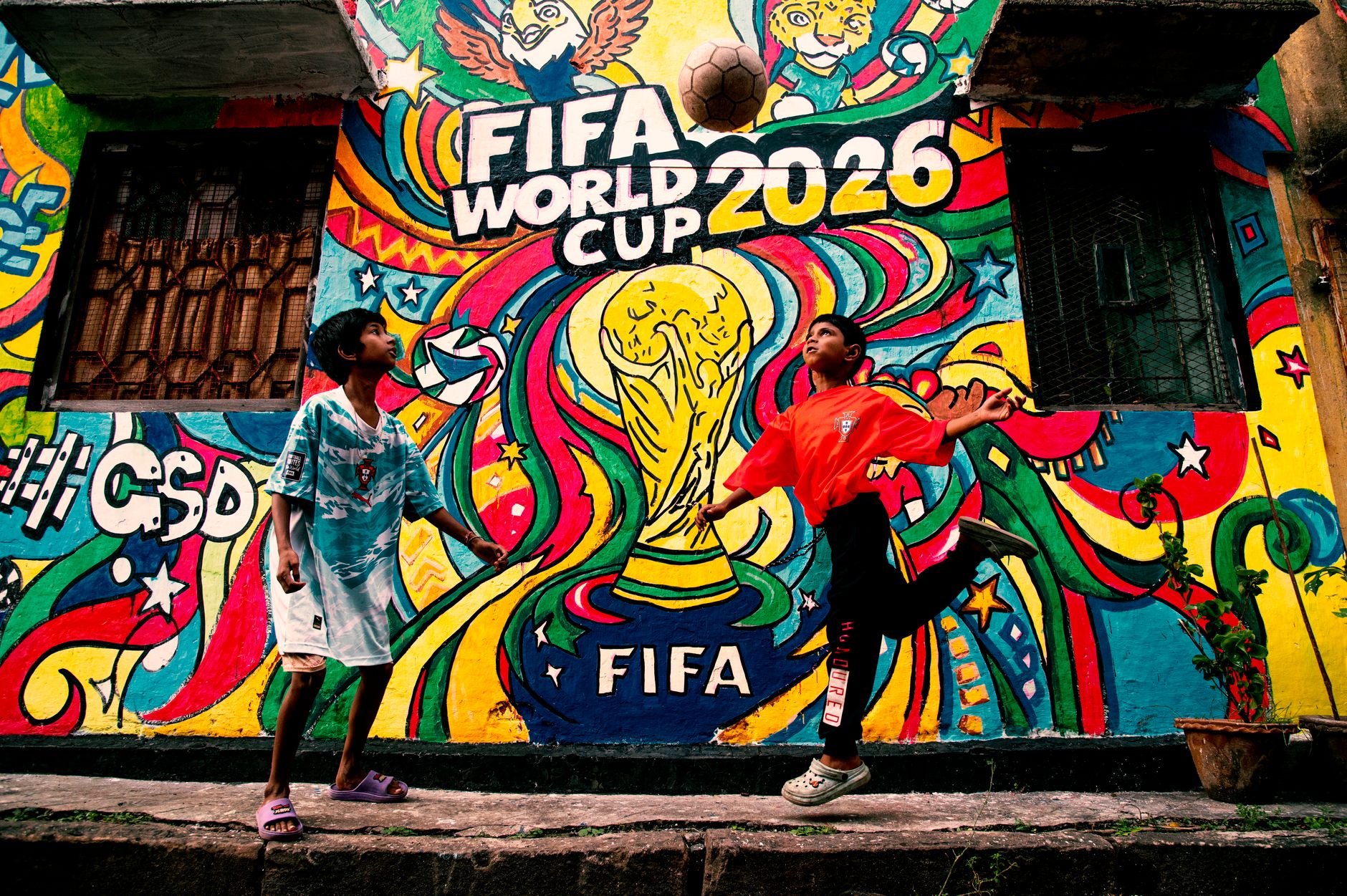
Photo by Anirban Das on Pexels
For responsible fans, the best “pick” is the coverage method that matches their purpose. Choose fixture tracking for planning, tactical analysis for understanding matchups, player statistics for deeper evaluation, and predictions only as an informed entertainment layer. If you gamble, use licensed services where legal, never chase losses, and remember that the tournament is designed to produce surprises.
The complete competition picture is available through our [Internal Link: World Cup 2026 predictions and match previews], while readers planning attendance can consult the [Internal Link: host-city travel and fan festival checklist].
Ready to follow every major development from the opening match to the final?
Frequently Asked Questions
Q: What is the 2026 FIFA World Cup football format?
A: The 2026 FIFA World Cup features 48 teams divided into 12 groups of four, followed by a 32-team knockout stage. The top two teams from each group and the eight best third-place teams advance to the Round of 32. The tournament contains 104 matches and runs from June 11 to July 19, 2026, in Canada, Mexico, and the United States.
Q: How can I follow World Cup 2026 football effectively?
A: Follow the tournament by combining the official fixture schedule with team news, venue conditions, tactical previews, and player statistics. Start with FIFA announcements, then use World Cup Hub for match predictions, squad analysis, and daily coverage. Check information close to kickoff because injuries, lineups, suspensions, and weather can materially change a matchup.
Q: What is the difference between the 2026 and 2022 World Cups?
A: The 2026 World Cup has 48 teams and 104 matches, while the 2022 tournament had 32 teams and 64 matches. The 2026 event is hosted by Canada, Mexico, and the United States, whereas Qatar hosted the 2022 competition. The larger field adds a Round of 32 and makes travel, scheduling, and squad rotation more important.
Q: Why does the host city matter in World Cup 2026?
A: Host cities matter because altitude, heat, humidity, travel distance, kickoff time, and surface conditions can affect performance. Mexico City is located at approximately 2,240 metres above sea level, while Los Angeles, Miami, Vancouver, and Dallas offer substantially different climate and travel profiles. Fans should also account for traffic, accommodation demand, and transfers between venues.
Q: How much does it cost to attend World Cup 2026 matches?
A: There is no single fixed attendance cost because ticket prices, travel, accommodation, transportation, and hospitality options vary by match and city. A fan should budget separately for official ticketing, flights or rail, hotels, local transfers, meals, and fan events such as the FIFA Fan Festival. Avoid unofficial resale offers and verify purchasing information through FIFA or authorized providers.
Q: Is World Cup Hub useful for match predictions?
A: World Cup Hub is useful for structured football analysis covering predictions, team tactics, player statistics, and tournament developments. Its information should supplement, not replace, official FIFA data, confirmed lineups, and verified injury news. If predictions influence gambling decisions, use only legal licensed services, set strict limits, and never chase a loss.
Q: What should I do if World Cup 2026 match information changes?
A: Recheck the official FIFA schedule, team announcements, and venue information before relying on an earlier preview. Match times, squad availability, travel arrangements, and local event guidance can change as the tournament approaches. World Cup Hub updates can provide context, but official organizers remain the authority for ticketing, entry rules, and final scheduling.