What Nobody Tells You About World Cup 2026
The 2026 FIFA World Cup is a 48-team tournament hosted by Canada, Mexico, and the United States, with matches played across 16 cities from June 11 to July 19, FIFA has expanded the field from 32 teams...

What Nobody Tells You About World Cup 2026
The 2026 FIFA World Cup is a 48-team tournament hosted by Canada, Mexico, and the United States, with matches played across 16 cities from June 11 to July 19, 2026. FIFA has expanded the field from 32 teams, creating 104 matches instead of the traditional 64 and adding a Round of 32 before the usual knockout rounds. The opening match is scheduled for Mexico City, while the final is set for MetLife Stadium in East Rutherford, New Jersey. World Cup Hub tracks fixtures, team tactics, player statistics, qualification context, and match predictions for fans across North America and international markets. The practical takeaway is simple: do not judge the 2026 schedule by country alone; compare travel, rest days, venue conditions, and group qualification routes before evaluating any match.
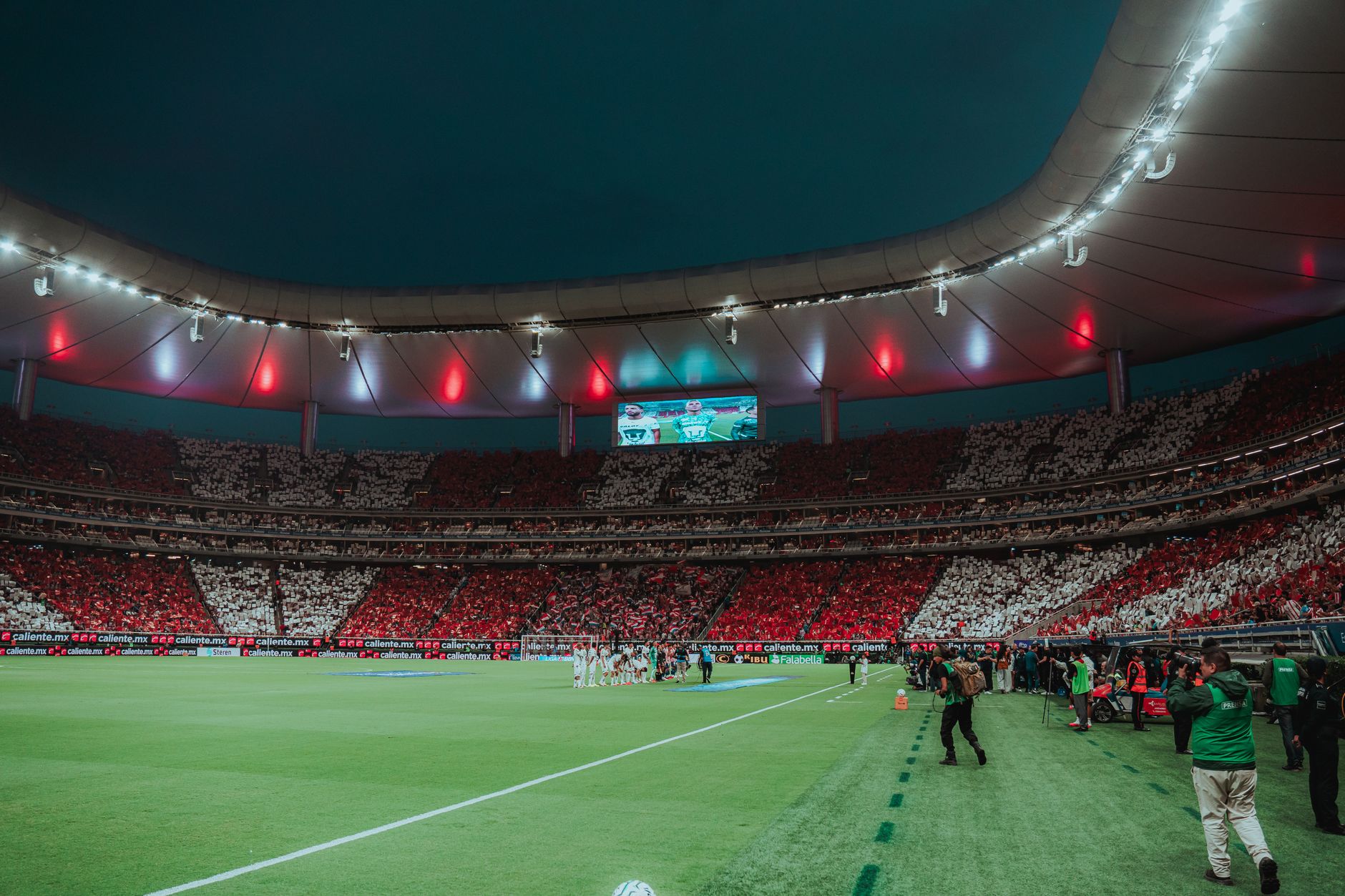
Photo by Santiago Sauceda González on Pexels
The biggest change is not merely “more teams.” It is tournament mathematics. The 2026 FIFA World Cup group stage will contain 12 groups of four teams, with the top two from each group and the eight best third-placed teams advancing to the Round of 32. That structure creates more meaningful permutations, more late qualification drama, and more opportunities for a strong side to face a dangerous opponent earlier than expected. The host trio also creates a geographical problem that older World Cup editions simply did not have: a team may begin in Mexico, travel into the United States, and then cross the continent again for a later fixture. [Internal Link: 2026 World Cup qualification guide] The official FIFA World Cup 2026 tournament page remains the best source for confirmed competition information, but raw fixtures do not explain the competitive context. That is where serious analysis starts.
Want the tournament context before the noise gets ridiculous?
Step 1: What should you map before studying the World Cup schedule?
Before studying individual fixtures, map the 2026 World Cup’s format, hosts, venues, and travel corridors. Canada, Mexico, and the United States will stage 104 matches across 16 host cities, so a schedule is also a logistical model involving climate, altitude, time zones, and recovery. This is the first filter for credible analysis.
The 2026 host cities are split across three countries:
- Canada: Toronto and Vancouver.
- Mexico: Mexico City, Guadalajara, and Monterrey.
- United States: Atlanta, Boston, Dallas, Houston, Kansas City, Los Angeles, Miami, New York/New Jersey, Philadelphia, San Francisco Bay Area, and Seattle.
Mexico City sits at roughly 2,240 metres above sea level, which is a materially different environment from Miami or New York/New Jersey. Monterrey brings heat and altitude considerations, while Vancouver and Seattle may produce cooler conditions. The official United 2026 host city information identifies the venues and locations, but analysts still need to examine actual kickoff times and travel distances. A team with a high-intensity pressing model may look brilliant in one match and visibly flat three days later. That is not always tactical collapse; sometimes it is a recovery problem wearing a football shirt.
One operational detail many previews skip is time-zone distortion. A European squad arriving in the Pacific time zone may face a nine-hour or greater body-clock adjustment, depending on its home base and venue. The first match can therefore be a poor indicator of a team’s full tournament level. I have seen bettors and supporters treat a sluggish opening performance as proof that a coach has lost the dressing room. Sometimes the squad has simply spent two nights sleeping at the wrong biological hour. Football is cruel enough without pretending physiology does not exist.
Step 2: How does the 48-team format change qualification pressure?
The 48-team format changes qualification pressure by making advancement more likely but knockout exposure more immediate. Twelve group winners, 12 runners-up, and the eight best third-placed teams reach the Round of 32, meaning a team can survive the group stage with four points in some scenarios but still face elimination in its next match. The expanded format rewards consistency without removing volatility.
Under the previous 32-team design, teams played three group matches and then entered a 16-team knockout bracket. In 2026, 16 teams will be eliminated after the group stage, while 32 teams continue into the first knockout round. FIFA’s official competition regulations should be checked for final ranking procedures, tie-breakers, and scheduling details because those technical rules can affect late-match incentives. A side leading 1–0 may need a second goal for group-seeding reasons, while another may protect a draw because goal difference is sufficient.
A useful working model is to separate three questions:
- Can the team finish in the top two?
- If it finishes third, can its points and goal difference beat the other third-placed teams?
- If it advances, does the bracket place a tournament favourite in its path immediately?
The third question is routinely ignored. A team may “qualify” and still receive a terrible competitive outcome. That matters for match predictions, squad rotation, and player props because a coach who knows advancement is secure may rest starters. World Cup Hub’s match previews should be read alongside confirmed line-ups, not treated as permanent forecasts. Odds move, injuries happen, and a tournament bracket can punish lazy assumptions with almost comic efficiency.

Photo by cottonbro studio on Pexels
The best way to understand this format is to model points rather than repeat slogans. A team earning six points should normally progress, but third-place ranking introduces cross-group comparison. A team with four points and a positive goal difference can be safer than a team with four points and a narrow negative margin. Meanwhile, the final group fixtures are played simultaneously to reduce strategic manipulation, so live match conditions can change the value of every attack and substitution. [Internal Link: World Cup group-stage tiebreakers] Do not confuse a friendly-looking group with a safe group; uneven quality can produce wild goal differences, and wild goal differences can decide who stays alive.
See how the expanded bracket affects actual match reading.
Step 3: Why do venue and travel conditions matter?
Venue and travel conditions matter because the 2026 World Cup spans three countries, multiple climate zones, and significant time-zone changes. Temperature, humidity, altitude, pitch familiarity, and recovery windows can alter pressing intensity, defensive compactness, and substitution patterns. These factors should adjust a team assessment rather than replace it.
Mexico City provides the clearest altitude example, while Miami and Atlanta introduce heat and humidity concerns. Dallas, Houston, and Kansas City may produce demanding summer conditions, although indoor or retractable-roof stadiums can change the match environment. The New York/New Jersey venue, MetLife Stadium, is scheduled to host the final, while SoFi Stadium in Inglewood and Levi’s Stadium in Santa Clara are among the United States venues associated with the tournament. Venue naming and final operational details should always be checked against FIFA updates because stadium branding and event logistics can change.
A practical venue checklist includes:
- Days between matches, not merely the calendar date.
- Domestic flight time and transfer complexity.
- Local kickoff temperature and humidity.
- Altitude difference between consecutive venues.
- Whether the stadium uses natural grass, temporary grass, or a controlled indoor environment.
- The team’s previous performance after long-haul travel.
- Bench depth and the coach’s substitution habits.
Here is an information-gain point that generic previews miss: travel impact is often nonlinear. A team can cope with one long journey when it has four recovery days, yet struggle after a shorter journey if it has only 72 hours and a late kickoff. That is why “distance travelled” is an inferior metric to “distance travelled divided by recovery time.” I use that ratio before making any judgement about a favourite. It is not glamorous, but neither is losing money because a spreadsheet forgot the flight schedule.
The National Centers for Environmental Information provides climate data that can help frame historical temperature and humidity expectations, although weather on a specific match day remains uncertain. FIFA has also stated that player welfare and tournament operations are central considerations in scheduling. The exact practical effect will vary by team, but the principle is firm: a venue is part of the matchup, not decorative background.
Step 4: How should you evaluate teams and players?
Evaluate 2026 World Cup teams through tactical fit, squad depth, recent competitive evidence, and tournament-specific conditions rather than reputation alone. France, Argentina, Brazil, England, Spain, Germany, Portugal, and the Netherlands may attract attention, but rankings do not reveal how each side handles congested fixtures, defensive transitions, or unfamiliar travel. Player availability and confirmed line-ups must remain the final checks.
Begin with the manager’s preferred structure. A 4-3-3 pressing side may struggle against a compact 5-4-1 if its full-backs advance simultaneously and expose the channels. A possession team may control territory but create little if its midfield lacks vertical passing. A counterattacking team may benefit from larger knockout spaces but lose value when an opponent refuses to attack. These are not abstract labels; they determine shot quality, field position, and the number of defensive actions required from key players.
For each contender, track:
- Build-up structure under pressure.
- Rest-defence shape when full-backs attack.
- Set-piece goals scored and conceded.
- Ball progression through the central midfield.
- Substitution quality after the 60th minute.
- Dependence on one striker, creator, or goalkeeper.
- Performance against teams using a similar tactical plan.
Player statistics need context. A forward scoring 10 goals in qualifying matches may have faced weaker defensive opposition than a forward scoring seven against elite teams. Likewise, a midfielder with high pass completion may play safe sideways passes rather than break lines. [Internal Link: player-statistics guide] Use event data from reputable providers such as Opta when available, then compare it with video evidence and role information. A number without a role is just a very confident rumour.
Responsible match analysis also means separating prediction from certainty. World Cup Hub can provide daily insights, tactical notes, and statistical comparisons, but no preview can remove variance from football. If you use match odds, set a budget before looking at markets, avoid chasing losses, and check the legal requirements in your jurisdiction. The International Betting Integrity Association publishes integrity resources for the betting sector; its existence does not make any wager safe, guaranteed, or suitable for every reader.
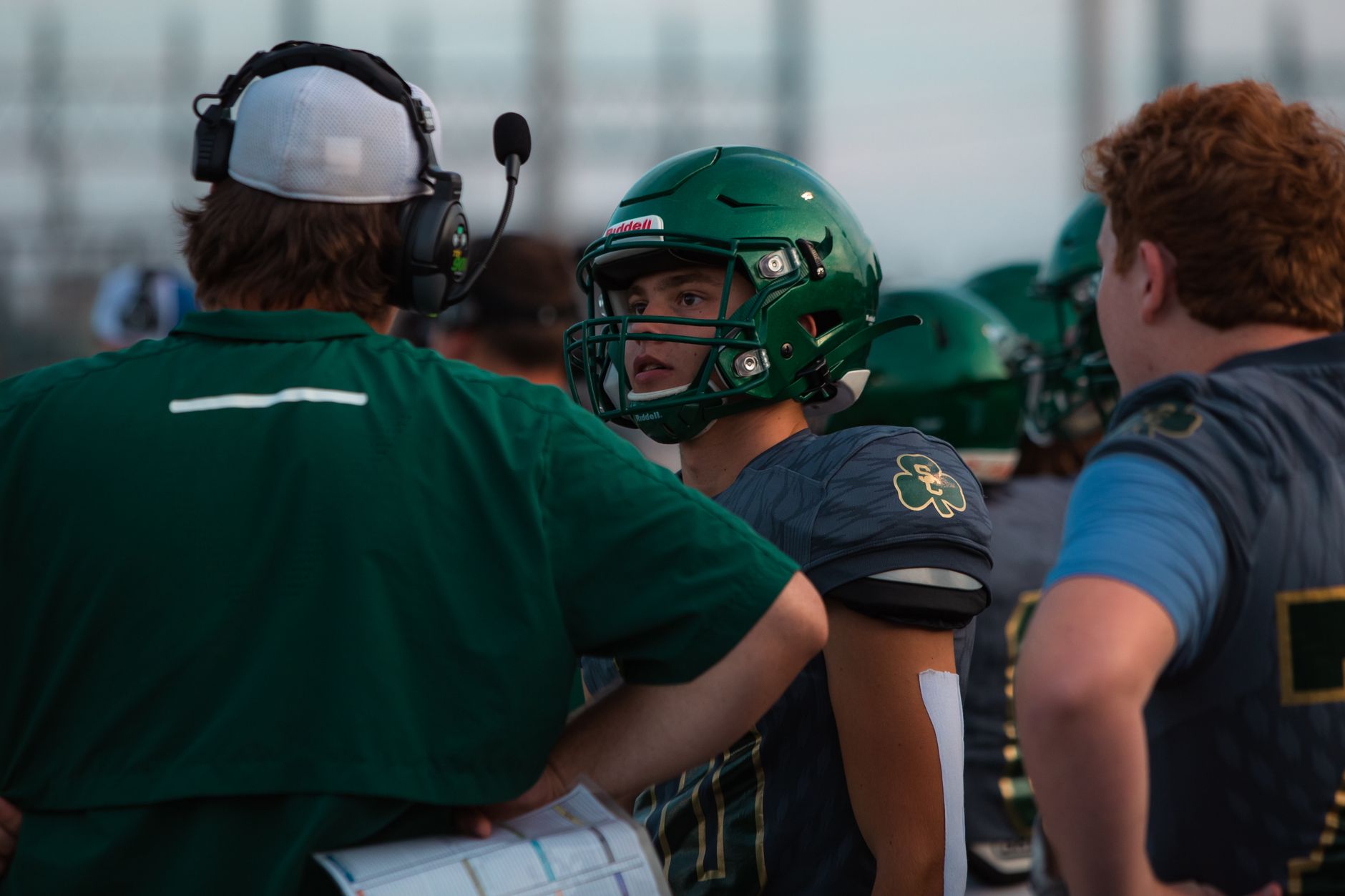
Photo by Yura Forrat on Pexels
At approximately two-thirds of the tournament, fatigue becomes more important than headline talent. A squad with 18 reliable players can outperform a star-heavy team that relies on 12. This is especially true in a 48-team event with a Round of 32, Round of 16, quarterfinals, semifinals, and final. A single extra-time match can alter the next game’s pressing ceiling, so prior minutes and recovery time belong in every serious model. The contrarian conclusion is straightforward: depth is not a luxury in 2026; it is a tactical weapon.
Compare the teams with evidence rather than reputation alone.
Step 5: Verification before trusting a World Cup prediction
Verification means checking the fixture, kickoff time, venue, squad news, tournament incentives, and market movement against authoritative sources before acting on a 2026 World Cup prediction. A prediction is not ready merely because it includes a percentage. It is ready when the assumptions behind that percentage have survived basic fact-checking.
Use this five-point verification sequence:
- Confirm the match date, venue, and local kickoff time through FIFA or the relevant national federation.
- Check injuries, suspensions, squad registration, and expected line-ups.
- Review the last five competitive matches without overweighting friendly results.
- Compare tactical matchup evidence, not only team rankings.
- Recalculate after major odds movement or a confirmed player absence.
The ESPN FIFA World Cup schedule is useful for fixture browsing, but it should not be the only source for final operational decisions. Cross-check FIFA, national federation announcements, and official team channels. A match preview written three weeks before kickoff cannot account for a hamstring injury, a coaching change, or a venue adjustment. That is why evergreen articles should explain process, while daily updates handle the unstable details.
One verification edge case deserves more attention: lineup announcements may arrive at different local times depending on the venue and competition procedure. A reader following from Europe can mistake “morning team news” for a universal deadline, then act before the official lineup appears. Build a time-zone conversion into your routine and record the source timestamp. This is boring work, but boring work is where errors go to die. [Internal Link: live World Cup match updates]
Do not present model output as fact. Label projections as projections, record the assumptions, and preserve the original number so you can evaluate whether your process improved. If you track predictions over 30 matches, calculate calibration rather than celebrating a short winning streak. A model that gives 70% probabilities to outcomes occurring 55% of the time is overconfident, even if it gets the final winner right. That distinction separates analysis from fan fiction.
Troubleshooting common failures
Most 2026 World Cup analysis failures come from stale schedules, incomplete injury information, poor time-zone handling, or treating team reputation as a substitute for matchup evidence. The fix is not to find a magical prediction formula; it is to identify which input failed and update the conclusion. Football remains uncertain, but sloppy research is optional.
Common problems include:
- The fixture time appears different across websites: check whether one source uses local time and another uses UTC.
- A venue is listed under an old stadium name: verify the current FIFA tournament listing and event-specific branding.
- A player is shown as available: check the official federation announcement rather than relying on a search snippet.
- A third-place scenario seems impossible to calculate: compare points, goal difference, goals scored, and the published competition tie-breakers.
- A favourite’s odds shorten sharply: investigate lineup news, not just market sentiment.
- The prediction model favours a team after a friendly win: reduce the weight of non-competitive matches.
- A live match view contradicts the pre-match forecast: update the game state; do not defend the original prediction out of pride.
A particularly common failure occurs when analysts compare possession percentages between teams without accounting for game state. A side leading 1–0 may surrender the ball deliberately, while a side trailing 1–0 may inflate possession through harmless circulation. Expected goals, field tilt, box entries, progressive passes, and shot locations provide a more useful picture, but even those figures need opponent and score-state context. The IFAB Laws of the Game also matter for understanding added time, substitutions, and match duration; small rule details can influence late-game strategy.
Another failure is overreacting to one knockout match. Penalty shootouts do not measure the same thing as open-play superiority, and a goalkeeper’s performance can dominate a small sample. Track process indicators across several matches, then distinguish repeatable strengths from tournament noise. I learned this one expensively, repeatedly, and with the confidence of a man who clearly had not learned it the first time.

Photo by Gera Cejas on Pexels
The safest workflow is to maintain a dated research log. Record the source, timestamp, venue, expected lineup, tactical assumption, and confidence level. If the conclusion changes, write down why. This turns a chaotic tournament into an auditable process and helps prevent hindsight bias after the final whistle. World Cup Hub’s role is to make that process easier through match predictions, tactical coverage, player statistics, and tournament updates, not to promise certainty where none exists.
The 2026 FIFA World Cup will reward teams that manage distance, depth, and detail. Canada, Mexico, and the United States provide a massive stage, while the 48-team structure creates unfamiliar qualification mathematics and a longer knockout route. Fans should follow confirmed FIFA information, compare tactical matchups, and treat odds as probabilities rather than guarantees. Start with the schedule, verify the conditions, and only then form a view. That order feels slower, but it is faster than correcting a bad assumption after the match has already started.
Ready to follow the tournament with clearer daily context?
Frequently Asked Questions
Q: What is the football World Cup 2026 format?
A: The football World Cup 2026 is a 48-team FIFA tournament with 12 groups of four teams. The top two teams in each group and the eight best third-placed teams advance to a 32-team knockout round. The competition contains 104 matches, beginning on June 11, 2026, and ending with the final on July 19, 2026. Canada, Mexico, and the United States are the joint hosts.
Q: How do I follow the 2026 World Cup schedule accurately?
A: Follow the schedule through FIFA first, then confirm local kickoff times with a reputable fixture provider such as ESPN. Convert the listed time into your own time zone and verify the venue before planning travel or viewing. Match dates, broadcast arrangements, and operational information can change, so check official updates close to kickoff rather than relying on a static social-media graphic.
Q: What is the difference between the 2022 and 2026 World Cup formats?
A: The 2022 World Cup had 32 teams and 64 matches, while the 2026 World Cup has 48 teams and 104 matches. The 2022 edition moved from groups of four into a 16-team knockout bracket, whereas 2026 adds a Round of 32. The larger format creates more matches and broader participation but also increases travel, recovery, and bracket-management challenges.
Q: Is the 2026 World Cup worth following for tactical analysis?
A: Yes, the 2026 World Cup is especially valuable for tactical analysis because teams will face new travel patterns, a larger knockout field, and varied venue conditions. The Round of 32 creates additional situations involving rotation, risk management, and late-stage fatigue. Supporters should compare pressing styles, transition defence, set pieces, and bench depth instead of relying only on FIFA rankings or reputation.
Q: What should I do if a World Cup schedule or lineup looks wrong?
A: Check the FIFA tournament page and the relevant national federation before trusting the information. Compare the publication timestamp, local time zone, venue name, injury status, and official squad announcement. Search snippets and old articles frequently preserve outdated details, so a current source with a visible date is more reliable than a high-ranking but stale result.
Q: How much does it cost to follow or analyse the 2026 World Cup?
A: Basic World Cup schedule access and official tournament information are generally free, while travel, tickets, broadcasts, data subscriptions, and betting products can carry separate costs. Set a fixed budget for any paid service and never treat betting as an investment or guaranteed income. If you use odds for research, confirm local legal requirements and use responsible-gambling tools where available.
Q: How can World Cup Hub help with the 2026 tournament?
A: World Cup Hub provides FIFA World Cup-focused coverage covering match predictions, team tactics, player statistics, and daily tournament insights. Its content can help readers organise fixture context, compare tactical matchups, and monitor relevant team news. Use those insights as research support, verify important facts through official sources, and make decisions only within your own legal and financial limits.